
Neuropeptide Y — your “resilience peptide” (and what histamine has to do with it)
What is Neuropeptide Y (NPY)?
Neuropeptide Y (NPY) is a small protein “messenger” used by both the brain and the nervous system. It’s especially active in stress-regulating regions (like the amygdala) and also shows up in the sympathetic nervous system (your fight/flight wiring). Under stress, your body can release more NPY as part of the adaptation response. PubMed+1
Why NPY matters for resilience
When researchers study people under extreme stress, one pattern shows up repeatedly: higher NPY responses often track with better performance and fewer stress symptoms.
In a classic military survival-stress study, Special Forces soldiers had higher plasma NPY during intense stress exposure, and higher NPY was associated with better behavioral performance and less dissociation. PubMed+1
Genetics also matters: a Nature study found that lower-expression NPY genetic profiles predicted higher threat-related amygdala reactivity and lower stress resiliency markers. PubMed+1
In PTSD research, multiple studies report lower cerebrospinal fluid (CSF) NPY in PTSD compared with controls—supporting the idea that NPY is part of the brain’s buffering system. PubMed+1
Big idea: Resilience isn’t “never feeling stress.” It’s having the capacity to meet stress, adapt, and recover—and NPY is one of the molecules linked to that protective arc. PubMed+1
How to support healthy NPY levels
NPY is not a supplement trend—it’s a biological system that responds to lifestyle inputs. Here are evidence-aligned levers:
1) Train your nervous system with physical stress (the “good stress” kind)
Higher-intensity exercise can trigger NPY release, in an intensity-dependent way. ScienceDirect+1
Try: brief intervals, hill walks, strength training, or bike sprints—scaled to your body.
2) Sleep protection (because resilience is built in recovery)
NPY is also involved in sleep/wake regulation and is discussed in sleep physiology literature as part of the neuropeptide network that influences sleep patterns. ScienceDirect+1
Try: consistent bedtime, morning light, caffeine cutoff, and a “downshift” routine. Supplement options: LunaSomm capsules and Perfect Sleep homeopathic
3) Stress inoculation + breathwork (NPY-friendly nervous system habits)
Human resilience research on NPY supports the concept that the body’s stress response profile (not just stress exposure) matters. PubMed+1
Try: short daily “nervous system reps” (physiologic sighs, 4–6 breaths/min for 5 minutes, or grounding walks).
Important nuance: NPY also influences appetite and metabolism—so the goal isn’t “more forever,” it’s appropriate release + return to baseline. PMC
NPY, mast cells, and “neuro-immune cross-talk”
Neuropeptide Y is part of the normal conversation between the nervous system and immune system. In short bursts, this signaling supports adaptation and resilience.
In people with chronic stress or heightened mast cell sensitivity, that same signaling can feel amplified, contributing to histamine-type symptoms. This doesn’t mean NPY is harmful — it means the system has lost flexibility.
Supporting resilience is about restoring balance, not suppressing signals.
Natural ways to lower histamine load (and calm mast cells)
1) Reduce the “histamine bucket” (food + freshness)
A low-histamine approach often emphasizes freshness (histamine rises with aging/fermentation/storage).
A placebo-controlled histamine-challenge paper also highlights that histamine intolerance is complex and not always straightforward—so personalization matters. PubMed There are times I couldn’t handle kombucha, and tea and coffee are still touchy for me (sadly). But I’ve always handled avocado and many other foods. To learn more about histamine- triggering foods, see this blog. Note that the idea IS NOT that you have to stay off these foods forever, but it can reduce the load when needed.
2) Support breakdown: DAO strategy (select cases)
Diamine oxidase (DAO) helps break down histamine in the gut. A paper reviewing DAO supplementation reports symptom improvement in histamine intolerance patients. PMC There is a brand I like on Amazon called HistArrest by VitaMonk.
3) Vitamin C (histamine-lowering signal)
Human research has found that ascorbic acid status relates to histamine levels, and oral vitamin C intake reduced blood histamine in a small study. PubMed+1
IV vitamin C has also been reported to reduce serum histamine in clinical contexts. PubMed
I recommend 500-1000 mg of vitamin C with bioflavonoids 2-3 X day, or try our Liposomal C (liquid, effective and kid-friendly)
4) Quercetin (mast-cell mediator support)
Quercetin has evidence for reducing mediator release from human mast cells and basophil-related histamine processes in experimental/clinical literature. OUP Academic+1 Here are two types to consider: Liposomal Bio Quercetin and homeopathic Quercetin.
5) Nervous system calming as “histamine hygiene”
Because neuro-immune cross-talk is real, sleep + recovery + stress reduction can indirectly help many people’s histamine picture—especially when symptoms flare during high stress. PMC+1
When it comes to trauma recovery, and the stress of chronic illness, each situation is a little different. You can think of it in types. For example:
Type 1, “Easily Stimulated” Reacts to anything and everything. AnXious, Liposomal Calm, Allergy Rescue and Quantum Hydration can be helpful.
Type 2, “Overloaded,” I may consider more organ support, such as Systemic Drainage, CerebroMax, Allergy Rescue for the person who is prone to food responses and headaches.
Type 3 “Shut Down,” as the client is in a freeze response due to trauma and stress. I like PTS Stress and Resilience.
Type 4 “Burnt Out” dragging, depleted and requires hormonal and mineral support. I like HPAxis, Resilience and Multi Trade Minerals.
Meet ‘Resilience’
DesBio’s Resilience is a homeopathic liquid remedy designed to support the body’s adaptive capacity under prolonged stress by working across multiple layers of regulation. It includes remedies that support:
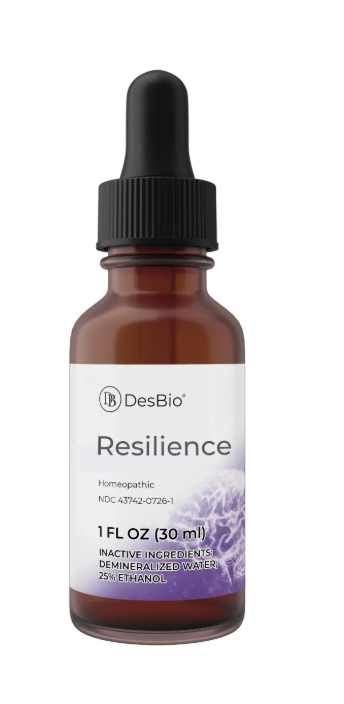
Stress endurance and persistence (Blatta americana, Formica rufa, Taxus baccata, Diospyros kaki);
Neuro-emotional integration and mental stamina (Cerebrum suis, Tela aranea, Chocolate, Salix vietlina, Veratrum album);
HPA axis and neuroendocrine communication (Hypothalamus suis, Hypophysis suis, Neuropeptide Y, Serotoninum);
Structural stability and grounding after depletion (Calcarea carbonica, Silica);
Renewal after toxicity or prolonged strain (Larrea tridentata, Sulphur).
Together, these ingredients support resilience not by suppressing stress, but by helping the nervous system remain organized, flexible, and capable of recovery—especially during emotional repair and HPA axis rebuilding.
This blog serves as education, not medical advice. Please have a primary care provider on your team.
Work with Me!
Got decision fatigue? Not even sure what you’re dealing with?
Work with me! Now offering bioenergetic testing for targeted plans and fast results.
Get on My List
If you are not on my newsletter, click here and you’ll get
my lymph detox guide and my weekly newsletter. (;